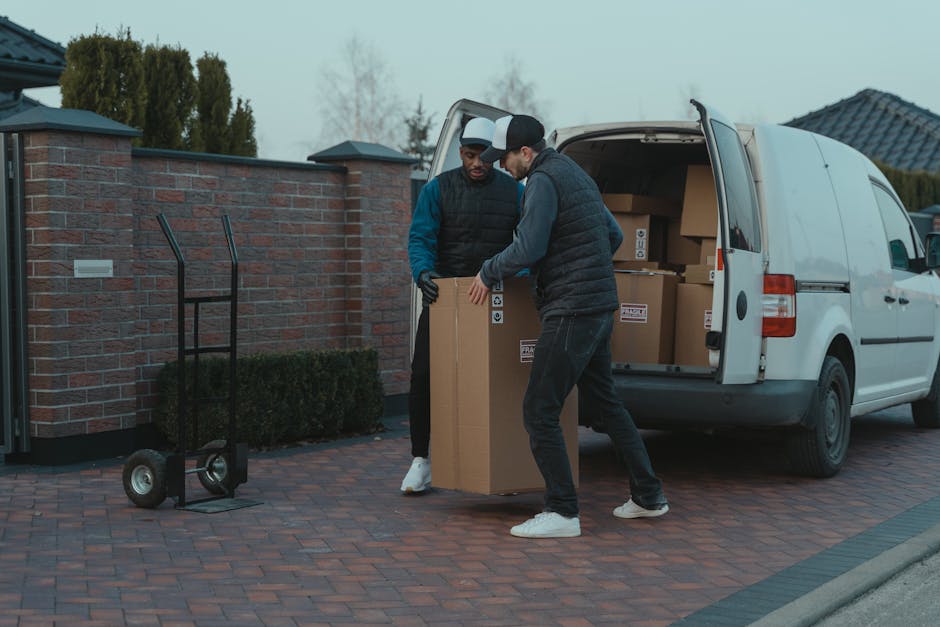
Small business moves in Hampton Hill: overnight vans
Posted on 22/06/2026
Small business moves in Hampton Hill: overnight vans for low-disruption relocations
If you run a small business in Hampton Hill, the idea of moving premises can feel a bit like trying to change a tyre while the car is still rolling. Stock needs protecting, staff need clear instructions, customers still expect replies, and the new place has to be ready by morning. That is exactly where small business moves in Hampton Hill: overnight vans become useful. They let you shift desks, files, retail stock, tools, or office equipment after closing time, so you can reopen with less chaos and fewer lost hours.
In practice, overnight moving is not just about having a van on standby. It is about timing, access, loading order, parking, packing discipline, and knowing what should move first. Done well, it gives you a cleaner handover and a calmer first day in the new space. Done badly, you end up with half-labelled boxes, a tired team, and that sinking feeling at 7:30 the next morning. Let's avoid that, shall we?
This guide explains how overnight van moves work in Hampton Hill, when they make sense, what benefits they bring, and how to plan one properly without overcomplicating things.

Why Small business moves in Hampton Hill: overnight vans Matters
Hampton Hill has a mix of independent shops, office suites, service businesses, studios, and home-based firms that occasionally outgrow a room, a unit, or a small workspace. For many of them, a daytime move is awkward at best. You may be closing for trade, interrupting appointments, or blocking access in a way that annoys neighbours and customers. Overnight van moves solve a very real operational problem: they compress the disruption into a period when fewer people are depending on the space.
That matters because even a modest relocation has knock-on effects. The wrong move window can mean missed orders, delayed admin, stressed staff, and a messy reset on opening day. Overnight transport gives you room to sequence the move properly. For example, a small accountancy practice can move filing cabinets and monitors after hours, then reconnect before the first client arrives. A salon can shift product stock, mirrors, and furniture without turning away appointments in the middle of the day. A small retailer can protect sales time while moving shelving and back-room inventory in stages.
There is also a local practical angle. In a busy London area, parking, access, and loading space are rarely unlimited. A short, controlled overnight window can make the difference between a smooth transfer and a stressful half-finished one. If your premises have narrow access or terrace-style loading points, planning matters even more; local insight like the kind discussed in narrow-access moving on Hampton Hill High Street can be surprisingly relevant when the van has to manoeuvre carefully and quietly.
Expert summary: Overnight van moves are best treated as an operations project, not just a transport booking. The real win is reducing downtime, protecting assets, and making sure the business can reopen on schedule.
How Small business moves in Hampton Hill: overnight vans Works
An overnight business move usually follows a simple but disciplined pattern. The van arrives after trading hours, the team loads the items that were prepared in advance, the driver moves them to the new premises, and unloading happens either immediately or in a second pass, depending on access and building readiness. It sounds straightforward. In reality, the move succeeds or fails on what happened before the van arrived.
The best overnight moves are staged. You do not try to move everything at once unless the business is genuinely tiny. Instead, you prioritise categories: essential tech, records, cash-handling equipment, display items, furniture, stock, and finally the less urgent bits. If refrigeration or temperature control matters, there may be special timing decisions too. For food-adjacent operations, the logic behind smart idle-time freezer storage shows the same principle: sensitive items need sequencing, not improvisation.
In a typical Hampton Hill overnight van move, you will also need to think about:
- which items can be dismantled before moving night
- how boxes and crates will be labelled
- where the van can wait legally and safely
- who has keys or access codes at both sites
- whether loading lifts, stairwells, or tight corridors are involved
- what must be online again first thing next morning
That last point is often overlooked. The van move itself is only part of the job. If your Wi-Fi router, card reader, printer, or POS terminal is buried in the back of the truck, your first trading hour becomes a scavenger hunt. Not ideal. A little annoying, actually.
For many owners, it helps to prepare the new site like a landing zone. Room labels, floor markers, and pre-set zones for IT, stationery, and stock all speed things up. If furniture is involved, the difference between a standard run and a furniture-focused move is worth noting; the approach outlined in furniture removals in Hampton Hill is a useful reminder that large items need more than muscle. They need order.
Key Benefits and Practical Advantages
Overnight vans are popular for one reason: they reduce business pain. But the benefits go beyond simply working at night. If you are trying to decide whether the approach is worth it, these are the advantages that usually matter most.
1. Less downtime
Closing early for a move can cost you a whole trading day. An overnight move compresses the interruption into hours that would otherwise be non-operational. That is especially useful if your business depends on bookings, walk-ins, or morning opening times.
2. Better customer continuity
When the move happens after hours, your customers are less likely to see half-packed shelves, noisy lifting, or staff disappearing in the middle of the day. For service businesses, that can help protect confidence and avoid awkward explanations.
3. Cleaner stock control
It is easier to count and track stock when you can move it in a controlled sequence. In retail or product-based firms, overnight loading can reduce accidental mixed boxes and missing items. Good packing habits matter here, and the advice in decluttering before a move is especially helpful if you want to avoid transporting old clutter "just because it is there".
4. Safer handling of equipment
With fewer people around, there is less foot traffic and fewer chances for accidental collisions. That matters for computers, printers, mirrors, shelving, specialist tools, and sensitive items. If your move includes heavy or awkward pieces, the caution in heavy lifting guidance is worth taking seriously; one rushed lift can ruin a night's work.
5. Easier access management
Some locations are simply friendlier at night. A van can sometimes be parked or positioned more efficiently, and loading may be quicker when the street is calmer. That is not a free pass, of course, but it can help.
6. Less emotional pressure on the team
Staff often cope better when they know the workday will not be interrupted. They can focus on packing and clear handover tasks rather than juggling customers, phones, and moving boxes all at once. Human beings are funny that way; fewer competing demands usually means fewer mistakes.
| Option | Best for | Pros | Trade-offs |
|---|---|---|---|
| Overnight van move | Small businesses needing a fast switch with minimal downtime | Lower daytime disruption, cleaner handover, better reopening readiness | Requires planning, access control, and clear overnight staffing |
| Daytime phased move | Businesses with flexible hours or low customer pressure | Easier visibility, less fatigue, simpler coordination | More interruption to trading and staff productivity |
| Weekend move | Teams that can pause operations briefly | Useful middle ground, easier supervision | Can still eat into rest time and may affect Monday readiness |
Who This Is For and When It Makes Sense
Not every business needs an overnight van move. But many more do than they first think. If your operation has customer-facing hours, expensive equipment, a small team, or a tight reopening deadline, the overnight format often makes perfect sense.
This approach is usually a strong fit for:
- retail shops moving stock and fittings
- small offices relocating desks, monitors, and filing
- salons, clinics, and studios with appointment schedules
- cafes or food businesses shifting non-perishable equipment and fixtures
- local online sellers with stock rooms and packaging stations
- trades and service businesses storing tools on-site
It is also practical for start-ups moving from a shared workspace into their own unit, where the new site must be ready before the next working morning. If you are a small team, overnight moving can save you from losing momentum. That first day in the new place sets the tone, and nobody wants a half-functional opening with tangled extension leads and missing labels.
There are times when it may be less suitable. If your move involves major building work, a large volume of fragile inventory, or a long chain of dependencies across multiple sites, you may be better off with a staged relocation or temporary storage. In those cases, a move may work better alongside short-term storage in Hampton Hill rather than trying to force everything into one night.
Step-by-Step Guidance
Here is the simplest way to plan an overnight van move without turning it into a spreadsheet marathon. Keep it practical. Keep it tidy. And be honest about what actually needs to move first.
Step 1: Define the business priority
Decide what "successful move" means for you. Is it opening the next morning? Keeping sales live? Moving just the office back room? The goal changes the plan. A lot.
Step 2: Audit everything by category
Group items into categories such as IT, paperwork, stock, furniture, equipment, and sensitive items. Decide what moves first, what moves last, and what can stay put for a few days. If you are clearing out old items before the move, practical decluttering advice helps keep the load focused and less expensive.
Step 3: Measure access at both ends
Look at door widths, staircases, parking restrictions, lift sizes, and any awkward turns. Hampton Hill properties can be deceptively fiddly, especially terraces and narrow access points. If your business operates from a tight street frontage or shared entrance, local guidance such as van tips for terrace properties can help you anticipate the practical pinch points.
Step 4: Label everything clearly
Use colour coding, room names, and priority tags. A box that says "important" is not enough. Better to write "reception printer - first unload" or "server accessories - IT bench". Specificity saves time when you are tired.
Step 5: Prep the new site before the van arrives
Clean, clear, and map the new space. Move anything that blocks access. Decide where desks, stock, and equipment will land. If you are also dealing with end-of-tenancy cleaning or final wipe-downs, it helps to follow sensible prep steps such as those in move cleaning techniques.
Step 6: Protect the fragile and the valuable
Pack fragile items separately. Use padding, wraps, and secure stacking. Sensitive or high-value items may need specialist handling. A business that owns display pieces, antique furniture, or a cherished reception object should not treat it like a box of leaflets. For unusual items, guidance on transporting antiques is a good reminder that caution beats speed every time.
Step 7: Build in a final check
Before the van departs, someone should walk the old site and the new site. Check drawers, sockets, cupboards, washrooms, and storage corners. You would be amazed how often a cable, key, or small but vital device gets left behind.
Step 8: Reopen with a priority list
The first hour in the new premises should be about function, not perfection. Get the essentials online, then work through the rest. A good move is not one that looks beautiful at 9:00 p.m.; it is one that lets you work at 9:00 a.m.
Expert Tips for Better Results
There are a few habits that consistently make overnight business moves easier. They are not glamorous. But they work.
- Pack for sequence, not just storage. The last thing packed should not be the first thing needed. Simple, but people forget.
- Keep a "first hour" kit. Put chargers, keys, basic stationery, tea supplies, a torch, tape, and spare labels in one clearly marked container.
- Protect cables separately. Tidy cables save a lot of swearing the next morning. We all know that one drawer.
- Use fewer, stronger labels. Labels that are too vague slow everyone down.
- Plan the first unload zone. Reception, tills, IT, and core stock should land exactly where you want them, not "somewhere near the front".
- Take photos before dismantling. Shelving layouts, wiring, and furniture positions are easier to recreate with a quick reference shot.
- Match the van to the load. Under-allocating vehicle space means late-night extra trips. Nobody wants that at midnight, trust me.
If your move includes bulky items such as sofas, desks, or retail fixtures, the handling guidance in sofa storage and protection methods and bed and mattress transition tips gives a useful sense of how proper wrapping and loading order reduce damage. The principle is the same even if you are not moving a home.
One more thing: do not rely on memory. Memory is charming, but terrible under pressure.

Common Mistakes to Avoid
Most problems with overnight business moves are not dramatic disasters. They are small avoidable errors that pile up. Here are the big ones.
Trying to move everything without sorting first
If you skip the audit stage, the van gets filled with items you did not need, while the essentials get buried. That is how morning starts go sideways.
Ignoring parking and access
In Hampton Hill, access can be straightforward one minute and awkward the next. Do not assume the van can stop wherever seems convenient. The local parking environment matters, and it is wise to review practical guidance such as moving permit and council rules before moving night.
Not protecting equipment properly
Monitors, printers, POS machines, and specialist tools do not enjoy being stacked loosely. Neither do they enjoy damp loading bays or half-secured straps.
Underestimating the time to unpack
The move is not complete when the van leaves. If the first working day depends on opening boxes and hunting for adapters, the move has been underplanned.
Leaving waste for "later"
Old packaging, broken fixtures, and redundant stock can linger for weeks if no one owns the clean-up. Better to decide in advance what gets recycled, reused, or removed. That keeps the new premises from feeling like the old one in a different postcode.
Forgetting about staff fatigue
Even an overnight move can be tiring, especially if a small team is doing all the prep as well. Keep expectations realistic. People do better with a sensible shift plan than with heroic last-minute scrambling.
And yes, there is always someone who says, "It'll be fine, we'll just wing it." It rarely is. Usually not.
Tools, Resources and Recommendations
Good overnight moves are built on simple tools and clear processes, not expensive extras. Here is what tends to help most.
- Moving crates and boxes: better for repeat use and clearer stacking than weak mixed packaging.
- Stretch wrap and padding: useful for bundling loose items and protecting surfaces.
- Strong marker pens and labels: essential, not optional.
- Furniture blankets: ideal for desks, cabinets, shelving, and display pieces.
- Tool kits: screwdrivers, Allen keys, tape, and spare batteries can save time at the new site.
- Checklists: a printed or shared digital list keeps everyone aligned.
For business owners still choosing the right setup, the wider service explanations in services overview can help you think about the difference between a simple van job, a more structured removal service, or a mixed approach. If you are comparing service styles, the article on what Hampton Hill pays for removals is a sensible read because it helps frame expectations without pretending every move costs the same.
For businesses with highly specific or fragile assets, specialist help matters. A piano in a studio, for example, is not just another heavy object; it needs proper handling and equipment, which is why the notes on piano removals and specialised moving equipment are relevant even in a commercial context. The lesson is simple: match the method to the item.
Law, Compliance, Standards and Best Practice
With overnight van moves, the practical side is only half the story. The other half is staying sensible about safety, access, and legal responsibility. You do not need to become a compliance expert, but you do need a workable process.
In the UK, businesses still have to think about health and safety, safe manual handling, insurance cover, parking restrictions, and access rules at both the old and new premises. If staff are helping with the move, the work should be planned so that lifting is manageable, routes are clear, and the load is not likely to injure someone or damage the property. If a heavy item is awkward, it is usually smarter to use the right tools and personnel rather than asking people to "just give it a lift".
It is also sensible to verify that the move team understands site safety, protective equipment, and loading discipline. The principles outlined in insurance and safety and health and safety policy matter because one careless lift or a bad parking decision can ruin an otherwise neat move. If you are disposing of old stock, packaging, or bulky items as part of the relocation, it is worth thinking through responsible disposal too, including the advice in avoiding bulky waste fines in Hampton Hill.
Best practice is simple: document access arrangements, keep keyholders informed, agree on who is responsible for packing and unloading, and use a provider that can explain how they handle liability, damage risk, and payment security. If those basics are not clear, pause. A smooth move is built on clear roles, not optimism.
Options, Methods, or Comparison Table
If you are deciding how to move your small business, it helps to compare the main approaches side by side. Overnight vans are not always the only answer, but they are often the best balance between speed and control.
| Method | Best use case | What it does well | What to watch out for |
|---|---|---|---|
| Overnight van move | Businesses needing minimal daytime disruption | Fast switch, cleaner opening day, less visible disruption | Requires strong planning and access arrangements |
| Daytime full move | Smaller loads or flexible trading hours | Easier supervision and visibility | Can interrupt customers and staff work |
| Phased move over several days | Medium complexity or mixed inventory | More control, less pressure per trip | Longer transition period, more coordination |
| Move with temporary storage | When the new site is not ready or the load is too large | Reduces pressure, allows sorting | Extra handling and extra planning |
For many local firms, overnight vans sit in the sweet spot. They are efficient without being rushed, and structured without becoming a project management monster.
Case Study or Real-World Example
Picture a small design studio in Hampton Hill moving from a compact upstairs workspace into a ground-floor unit nearby. The team has two desks, several monitor setups, sample materials, storage drawers, a printer, and a few framed presentation pieces. Nothing enormous, but enough to make a mess if handled badly.
They start by sorting items into "reopen first", "can wait until morning", and "archive or discard". The office manager labels each box with a destination zone and colours the priority boxes in bright tape. The designer photographs the cable layout at each desk. A small furniture strip-down happens the day before the move, and the team clears the old workspace so nothing useless gets dragged along for the ride.
That night, the van arrives after closing. The first load is the IT kit and essential files, then the desks, then the display pieces. At the new site, the team has already marked out the work zones, so unloading is tidy instead of random. By morning, the studio is not perfect - there are still a few cables to sort and one drawer nobody quite trusts - but it is open, functional, and calm enough for the first client of the day.
That is the real value of overnight moving. Not perfection. Resilience. A business can keep moving even while the address changes.
Practical Checklist
Use this as your quick overnight move checklist before the van turns up.
- Confirm the move date, access times, and keyholder contacts
- Decide which items must be operational the next morning
- Separate essential IT, admin, and payment equipment
- Label all boxes by room, function, and priority
- Protect fragile or high-value items with proper padding
- Measure doorways, staircases, lifts, and loading access
- Check parking restrictions and loading permissions
- Prepare the new site with clear landing zones
- Set aside a first-hour kit with chargers, tape, keys, and stationery
- Confirm who will inspect the old site and lock up
- Arrange waste removal or recycling for unwanted items
- Review insurance, payment details, and any service terms in advance
If you can tick those off, you are already ahead of most rushed business relocations.
Conclusion
Small business moves in Hampton Hill: overnight vans are really about protecting the working day. They give you a way to relocate without broadcasting the disruption to every customer, client, and passer-by. When planned properly, they reduce downtime, improve access control, and make the reopening feel much more manageable.
The formula is simple enough: sort first, label clearly, plan access carefully, and treat the move like a short operational project rather than a glorified van hire. That mindset changes everything. It keeps the work calmer, the team steadier, and the first morning in the new place far less frantic.
If your business move needs to happen quietly, quickly, and with as little interruption as possible, the next sensible step is to map out your load, your access, and your overnight timing before the pressure builds.
Get a free quote today and see how much you can save.
And if you are still at the "where do we even start?" stage, that is fine too. Start small, keep it clear, and give yourself enough breathing room. A good move has a way of feeling easier than you expected once the plan is in place.