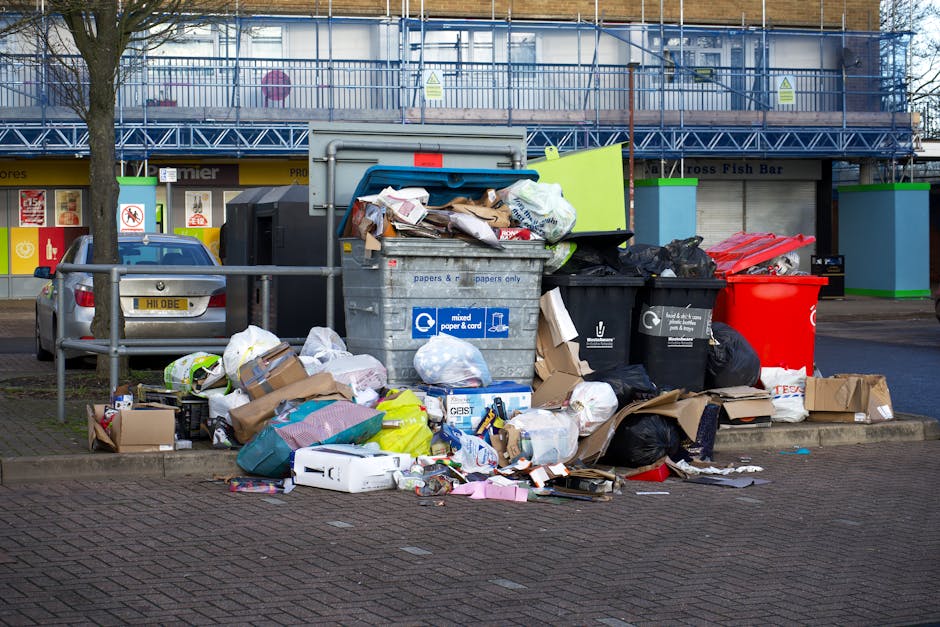
Avoid Richmond Council fines for bulky waste in Hampton Hill
If you live in Hampton Hill and you've got an old sofa, broken wardrobe, or a pile of flat-pack leftovers sitting by the front wall, the situation can turn awkward fast. Bulky waste is one of those jobs that seems simple until it isn't. A missed collection, the wrong placement, or leaving items out early can lead to complaints, delays, or worse, a fine from the local council. The good news? It is very manageable once you know the rules and the practical habits that keep you out of trouble.
This guide explains how to avoid Richmond Council fines for bulky waste in Hampton Hill, what tends to go wrong, and how to handle collection or removal the sensible way. We'll keep it straightforward, local, and useful. No fluff. Just the sort of advice that helps you get the job done without that sinking feeling when you realise the sofa has been sitting on the pavement since Tuesday morning.
Table of Contents
- Why this matters in Hampton Hill
- How the process works
- Key benefits and practical advantages
- Who this is for
- Step-by-step guidance
- Expert tips for better results
- Common mistakes to avoid
- Tools, resources and recommendations
- Law, compliance and best practice
- Options and comparison
- Case study or real-world example
- Practical checklist
- Conclusion
- Frequently asked questions
Why Avoid Richmond Council fines for bulky waste in Hampton Hill Matters
Bulky waste sounds harmless. It's just a mattress, a table, maybe an old fridge. But in a busy London suburb like Hampton Hill, the consequences of doing it badly can stack up quickly. Items left on the street too early can block pavements, attract complaints, and create a messy-looking frontage that neighbours notice straight away. And let's face it, once a neighbour says "that's been there for days," the clock starts ticking emotionally as well as practically.
Richmond Council, like most councils, expects residents to follow the rules for waste presentation and collection. That usually means putting items out at the correct time, in the correct place, and only when they are due to be collected. If you leave bulky waste in the wrong spot, dump it without arranging a proper collection, or mix it with general rubbish in a way that causes a nuisance, you can end up with enforcement action or charges you did not want.
There is also a wider point here: proper bulky waste handling protects the street, keeps the area tidy, and reduces fly-tipping risk. In a place like Hampton Hill, where homes often sit close together and parking can be tight, one badly handled item can become everyone's problem. If you want the calmer route, it's much easier to get the process right from the start than to deal with a complaint later.
Practical takeaway: Most bulky waste problems are not caused by the item itself. They happen because of timing, placement, or using the wrong disposal route.
How Avoid Richmond Council fines for bulky waste in Hampton Hill Works
The core idea is simple: bulky waste should be removed through an approved, lawful route, and you should follow the collection instructions exactly. In practice, there are a few common paths. You may use a council bulky waste collection, a licensed private waste carrier, or another lawful disposal option, depending on what you are getting rid of and how quickly you need it gone.
What matters most is not just removal, but correct removal. A bulky item left near the road too early can be classed as poorly presented waste. A pile left outside after a missed collection can become a nuisance. And if you hand waste to someone who is not properly licensed, you risk it being dumped elsewhere and traced back to you. That's the sort of headache nobody wants.
In normal day-to-day terms, avoiding Richmond Council fines for bulky waste in Hampton Hill usually means three things:
- checking what counts as bulky waste before you book
- following the exact collection instructions and timings
- using a proper, traceable disposal route
There's a subtle but important difference between "I've booked a removal" and "I've handled this correctly." Councils care about the latter. So do your neighbours, frankly.
If you're arranging broader household clearance as well, it can help to plan the job properly rather than treating each item separately. In that case, services like house clearance support can be useful when you need a more organised approach to multiple items at once.
Key Benefits and Practical Advantages
Doing bulky waste properly is not just about avoiding a fine, although that is obviously a big part of it. There are a few very real practical benefits that make the extra effort worth it.
Less risk, less stress
When you know the collection rules, there's less chance of a costly mistake. No guesswork. No last-minute panic because the sofa is still in the hallway and the collection is tomorrow morning.
A tidier property and street
Bulky items left neatly and only when required are less likely to create complaints. That matters in terraced roads and narrower residential streets where a single large item can feel like it dominates the whole pavement.
Better time control
Good planning helps you avoid the classic "shall we just leave it here for now?" moment. Truth be told, that decision causes a lot of avoidable trouble. Knowing your collection slot, access point, and storage space beforehand keeps the job moving.
Lower chance of fly-tipping problems
Using lawful, traceable disposal methods reduces the risk of your waste ending up dumped elsewhere. That protects you as well as the area around you.
More predictable costs
When you understand the options, you can compare council collections with private removal and choose the route that makes sense for the type and volume of waste. The cheapest option is not always the best one if it creates more hassle later.
| Benefit | What it means in real life | Why it helps |
|---|---|---|
| Compliance | You follow the local rules for waste presentation | Reduces the risk of fines or enforcement action |
| Convenience | Items are removed in a planned way | Saves time and avoids clutter |
| Neighbour relations | No unnecessary mess on the street | Fewer complaints and less friction |
| Traceability | Waste goes through a lawful channel | Protects you if anything is checked later |
Who This Is For and When It Makes Sense
This is for anyone in Hampton Hill dealing with large items that won't go into a normal wheelie bin. That includes homeowners, tenants, landlords, letting agents, and people clearing a property after a move, refurbishment, or bereavement. Bulky waste problems often happen in the middle of an already busy week, which is exactly when mistakes creep in.
You may need this guidance if you are getting rid of:
- sofas, armchairs, and mattresses
- wardrobes, cabinets, and shelving
- table tops, bed frames, and desks
- white goods or other large household items
- broken furniture after a move or renovation
It also makes sense if you're managing a property and want to avoid repeated issues with items being left out incorrectly. A lot of councils see the same pattern: one person copies what worked last time, but the rules, schedule, or collection requirements have changed. That's where the trouble starts.
If you only have one item, a council collection might be enough. If you have multiple bulky items, mixed waste, or something awkward to move down stairs, you may need a more flexible removal option. Deciding that early saves a lot of lifting, waiting, and "we'll just see how it goes" optimism.
Step-by-Step Guidance
Here's a practical way to handle bulky waste in Hampton Hill without drifting into fine territory.
1. Identify exactly what needs removing
Start by listing the items. Be specific. "Furniture" is too vague if you are comparing removal options or checking what a collection accepts. A sofa, a mattress, and a broken chest of drawers are all different jobs in practice.
2. Separate bulky waste from normal rubbish
Do not mix large items with general household waste if the collection route does not allow it. Keep bags, recycling, and loose rubbish separate. This makes collection simpler and avoids refusal on the day.
3. Check the collection method before you move anything outside
This is the bit people often rush. If you are booking a collection, confirm where the item needs to be placed, when it should go out, and whether it must be left in a particular condition. Sometimes items need to be outside the property boundary; sometimes they should only be placed out shortly before collection.
4. Protect access and keep pathways clear
If removal crews need access through a narrow hall, shared entrance, or side passage, clear the way first. In older Hampton Hill properties, access can be tighter than you think. One shoe rack or pram can make a surprisingly annoying difference.
5. Set a reminder for collection time
This sounds almost too basic, but it matters. Put a reminder on your phone. If the collection is booked for a particular day, make sure the item is not left out early unless the instructions clearly allow it. Early placement is one of the easiest ways to create a complaint.
6. Keep records of the booking
Save your booking confirmation, receipt, or collection reference. If there's a question later, it helps to show that you arranged disposal properly. Simple. Useful. Worth doing.
7. Confirm the item was actually collected
Check after the scheduled time. If the item is still there, act quickly rather than assuming someone will "get round to it." Delays can turn a neat plan into an awkward roadside pile by the following day.
When bulky waste is part of a larger clearance, it can be worth thinking about a more coordinated approach. If you are also dealing with rooms full of unwanted items, commercial waste solutions may be relevant for mixed non-domestic loads or property management needs, provided the waste type fits the service.
Expert Tips for Better Results
A few small habits can save a lot of trouble. Honestly, the difference between a smooth disposal and a messy one is often just organisation.
Measure awkward items before booking
Large wardrobes, divan bases, and bulky tables can be awkward around tight corners or stairwells. A quick measurement helps you judge whether removal is straightforward or whether the item needs to be dismantled first.
Dismantle where sensible
Breaking down furniture can make collection faster and safer, but only if you can do it without creating sharp edges or loose fixings. Keep screws and fittings in a labelled bag. Tiny habit, big payoff.
Don't leave items in communal areas
If you live in a flat or shared building, avoid leaving bulky waste in hallways, bin stores, or entrance lobbies unless the building management specifically allows it. Those areas can quickly become obstruction points and a source of complaints.
Choose a timing window that works for the street
If the road is especially busy in the morning, think about how the item will sit outside and whether it will block access. On some streets in Hampton Hill, a large item can make parking or visibility worse than you expect. Not ideal.
Use the right service for the right job
If you're clearing one broken chair, a simple collection route may be fine. If you're doing a post-renovation clear-out with mixed waste, you may need a more robust service. Using the wrong method can cost you more overall.
Ask about restricted items early
Some waste types need special handling. Items like fridges, freezers, and certain electricals can carry extra rules. Don't wait until the night before. That's how rushed decisions happen.
Expert view: Good bulky waste management is mostly about preparation, not force. If you can plan the item, the route, and the timing, the rest is usually much easier.
Common Mistakes to Avoid
Most bulky waste fines and disputes come from a handful of predictable mistakes. The frustrating part is that they are all avoidable.
- Leaving items out too early - this is probably the most common error. It creates unnecessary street clutter and can trigger complaints.
- Using an unlicensed collector - if the waste is fly-tipped, you may still be asked questions about where it came from.
- Assuming all bulky items are treated the same - they are not. Different materials and sizes may need different handling.
- Blocking pavements or shared access - even if the item is yours, it cannot create an obstruction.
- Forgetting to confirm collection details - time, location, and item list all matter.
- Mixing in extra rubbish - a single accidental bag can complicate the whole job.
- Not keeping proof of booking - if there is a disagreement, evidence helps.
One of the sneakiest mistakes is the "I'll just move it later" approach. Later turns into tomorrow, then into the weekend, and before you know it the item has become part of the street furniture. Not great.
Tools, Resources and Recommendations
You do not need a warehouse of equipment to handle bulky waste well. A few basics are enough.
- Measuring tape - useful for checking whether items can be dismantled or moved safely.
- Marker pen and bags - handy for storing screws, fittings, and small detachable parts.
- Phone calendar reminders - simple, but absolutely effective for avoiding missed collection windows.
- Gloves and sturdy footwear - especially if you are moving items through narrow areas or outside in wet weather.
- Camera or phone photos - useful for record-keeping if you need proof of what was left out and when.
If you are comparing disposal routes, it can help to think in terms of convenience, risk, and scale rather than price alone. A low-cost option may seem attractive, but if it leaves you unsure about collection timing or legality, it may not be the best value. To be fair, people often only learn that after the fact.
When the job is larger than expected, a professional removal service can reduce friction. For broader property clear-outs, you may also find it useful to look at office clearance support where the waste is from a work space, rented office, or home office setup that has accumulated furniture and equipment.
Law, Compliance, Standards, or Best Practice
Bulky waste handling in the UK sits within a wider framework of waste duty, local collection rules, and responsible disposal practice. You do not need to become a lawyer to get this right, but you should understand the basics.
As a resident, you are generally expected to present waste correctly and use lawful disposal routes. If you hand waste to someone else, it is sensible to check that the collector is properly authorised to carry waste. If you are using a private service, ask for confirmation of lawful handling and keep any paperwork or receipts.
Best practice usually includes:
- booking with a recognised provider or council route
- keeping waste on your property until the correct time, where possible
- avoiding obstruction of public land, pavements, and access routes
- separating bulky waste from items that require special handling
- retaining records in case there is a query later
It is also sensible to be careful with electrical items, fridges, and anything containing fluids, gas, or sharp components. Even if the item looks harmless now, mishandling it can create safety problems later. Small issue, big hassle.
Compliance is really about traceability and common sense. Can you show how the item was disposed of? Did you follow the instructions? Was the item left out in a way that caused a nuisance? Those are the questions that matter in practice.
Options and Comparison
Choosing the right bulky waste route depends on how many items you have, how quickly they need removing, and how much effort you want to put in. Here's a practical comparison.
| Option | Best for | Pros | Watch out for |
|---|---|---|---|
| Council bulky waste collection | One-off household items | Simple and familiar for residents | May have booking rules and timing limits |
| Private waste removal | Faster or more flexible clear-outs | Convenient and often tailored to access issues | Must use a lawful, traceable provider |
| Property clearance service | Multiple items or whole-room clear-outs | Efficient for larger jobs | Can be more than you need for a single item |
| DIY transport to a suitable facility | Smaller volumes if you have the vehicle and time | Full control over timing | Manual lifting, access, and fuel add effort |
If you only have one awkward item, the simplest route is often best. If the job includes several heavy pieces, a clearance option can save a lot of repeated lifting. The right answer depends on the actual mess in front of you, not the ideal version of the job in your head.
Case Study or Real-World Example
Here's a realistic Hampton Hill scenario. A resident is replacing a bedroom set and ends up with a dismantled wardrobe, an old mattress, and two small bedside units. The first instinct is to place everything outside the evening before collection, just to get it out of the hallway. Sounds harmless. But if the instructions say the items should not be placed out until the morning, that creates a risk of complaint or enforcement, especially if passers-by think it is fly-tipped waste.
Instead, the better approach is to keep the items on private property until the correct time, confirm the collection details, and make sure the route to the front of the property is clear. The resident labels screws, keeps the mattress dry, and puts a reminder in the phone for the morning. Nothing dramatic happens, which is exactly what you want. The collection goes ahead, the pavement stays clear, and the household avoids a pointless fine risk.
That's the pattern, really. Most "success stories" in waste management are just boring good habits done on purpose. And boring is fine here. Boring is good.
Practical Checklist
Use this checklist before you put any bulky waste out in Hampton Hill:
- Have I identified every item clearly?
- Do I know the correct collection method or disposal route?
- Have I checked the timing and placement instructions?
- Will the items block pavements, doors, or shared access?
- Have I separated bulky waste from ordinary rubbish?
- Do I know whether any item needs special handling?
- Have I kept proof of booking or disposal?
- Is the item staying on private property until the right time?
- Have I planned for bad weather or access issues?
- Do I know who to contact if the item is not collected as planned?
If you can tick all of those off, you are in a much better position than most people who rush a disposal job at the last minute. Honestly, that's half the battle.
Conclusion
Avoiding Richmond Council fines for bulky waste in Hampton Hill comes down to a few practical habits: know what you are disposing of, use a lawful route, follow the timing rules, and keep the waste out of the way until collection day. Once you understand that rhythm, the whole process becomes much less stressful.
The safest approach is usually the simplest one. Plan ahead, keep records, and don't assume the street is an acceptable holding area. If you stay organised, you protect your wallet, your neighbours, and your own peace of mind. That's a decent outcome for a job nobody really enjoys.
Get a free quote today and see how much you can save.
Frequently Asked Questions
What counts as bulky waste in Hampton Hill?
Bulky waste usually means large household items that won't fit in a regular bin, such as furniture, mattresses, or other oversized objects. If in doubt, check the specific collection rules before leaving anything out.
Can I leave bulky waste on the pavement the night before collection?
Not necessarily. Some collection arrangements require items to be placed out only at a specific time, and leaving them out early can create a nuisance or breach local instructions. Follow the exact booking guidance.
How do I avoid Richmond Council fines for bulky waste in Hampton Hill?
Use an approved disposal route, keep the waste on private property until the correct time where possible, avoid blocking pavements, and make sure the item is collected or removed lawfully. Records help too.
What happens if my bulky item is not collected?
If collection does not happen as planned, contact the provider quickly and keep the item secured on your property. Do not just leave it out indefinitely, because that can increase the risk of complaints or enforcement.
Can I put broken furniture out with general rubbish?
Usually not. Large furniture should be handled through a bulky waste route or another suitable disposal method. Mixing large items with general waste can cause collection issues.
Do I need proof that the waste was removed properly?
Yes, it is wise to keep a booking confirmation, receipt, or similar record. If a question comes up later, that paperwork can be very helpful.
What if I have several large items at once?
If you have more than one bulky item, a clearance service or a more flexible removal option may be easier than trying to manage each piece separately. The best choice depends on the volume and access.
Are electrical items treated differently?
Often, yes. Fridges, freezers, and some electrical items may need special handling, so it is sensible to ask before you arrange collection.
Is private bulky waste removal better than council collection?
Not always. Council collection can be fine for a single item, while private removal can be better for speed, flexibility, or harder access. It depends on your situation and how quickly you need the space cleared.
What is the safest way to prepare large furniture for disposal?
If possible, dismantle it into manageable parts, keep fixings together, and make sure the pieces can be moved without causing damage or blocking access. Simple preparation can make the whole job much easier.
Can I avoid fines if the item is left out accidentally?
Act quickly. Move it back onto private property if you can, correct the placement, and follow the proper collection instructions. The sooner you respond, the better.
Why is fly-tipping such a concern with bulky waste?
Because once waste leaves your control, you can lose track of where it ends up. Using lawful, traceable disposal reduces the chance of the item being dumped somewhere else and traced back to you.
What should landlords in Hampton Hill do differently?
Landlords should set clear waste rules for tenants, document collection arrangements, and avoid leaving bulky items in communal spaces. A little structure saves a lot of back-and-forth later.
What is the easiest first step if I am not sure what to do?
List the items, check the collection requirements, and decide whether you need a council collection or a private removal service. Once that decision is made, everything else becomes much simpler.